About Christine Harris
MS, LPCC, AuDHD
Hi!
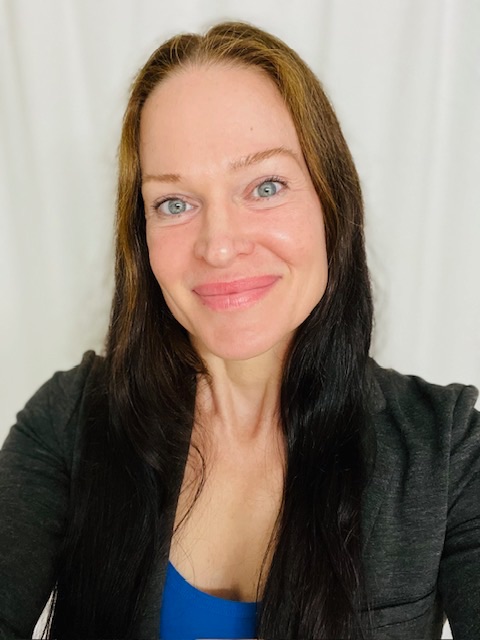
I’m Christine Harris, a licensed clinical therapist, founder of Neurodiversity Affirming Therapy and Wellness Center, and a late-diagnosed AuDHD (Autistic & ADHD) adult.
Like many of the people I work with, I spent years trying to understand why life felt so much harder than it seemed to be for everyone else. I learned to mask, overachieve, self-monitor, and push through exhaustion in order to function within expectations that never fully fit how my nervous system actually worked.
From the outside, much of that effort looked successful.
Internally, it often felt exhausting, confusing, and unsustainable.
When I eventually discovered I was autistic and ADHD, the most significant shift was not simply realizing I was neurodivergent. It was realizing that many of the struggles I had spent years interpreting as personal failures were actually understandable responses to living against my natural neurology.
That movement from chronic self-criticism toward more accurate self-understanding fundamentally changed the way I understood myself, my history, my needs, and the world around me.
It also changed the way I practice therapy.
Why I Created This Practice
I created this practice to offer the kind of space I wish had existed earlier in my own life — a space where neurodivergent adults do not have to translate themselves into neurotypical language, defend the legitimacy of their experiences, or constantly perform versions of themselves designed for other people’s comfort.
Too many neurodivergent adults spend years in systems that misunderstand them.
Their exhaustion becomes depression.
Their overwhelm becomes anxiety.
Their shutdown becomes avoidance.
Their masking becomes “high functioning.”
Their suffering becomes invisible because they learned how to keep performing while carrying enormous internal strain.
Over time, many people begin viewing themselves through frameworks built around deficiency, failure, or pathology without ever receiving an explanation that fully accounts for the deeper patterns underneath what they are experiencing.
My work is grounded in the belief that accurate understanding changes people’s relationship to themselves.
Not because understanding magically removes struggle, but because it often replaces years of shame, confusion, and self-blame with context, clarity, self-trust, and a more sustainable way of relating to your nervous system.
My Approach
My approach is neurodiversity-affirming, trauma-informed, evidence-based, and depth-oriented.
I do not see autism, ADHD, or other forms of neurodivergence as problems to eliminate. I view them as natural variations in human nervous systems that exist within environments that are often profoundly mismatched to neurodivergent needs.
Therapy with me is not about forcing yourself to appear more neurotypical.
It is about understanding yourself more accurately, reducing the chronic strain of masking and self-monitoring, and building ways of functioning that are actually sustainable for your nervous system, capacity, relationships, and daily life.
I integrate formal clinical training with lived neurodivergent experience, which allows me to approach this work both professionally and personally. I understand the research and clinical frameworks around neurodivergence, but I also understand what it actually feels like to live inside these patterns every day.
That combination shapes the depth and orientation of my work.
What Guides My Work
Several core principles shape the way I approach therapy and psychoeducation.
Neurodiversity-affirming practice means understanding neurodivergence within context rather than automatically framing difference as dysfunction.
Trauma-informed care means recognizing the cumulative impact of years spent masking, adapting, over-functioning, misunderstanding yourself, and existing in environments that often required chronic self-suppression in order to belong.
Evidence-based practice means integrating established therapeutic approaches while adapting them thoughtfully for neurodivergent nervous systems rather than rigidly applying techniques that may not fit.
Collaboration means recognizing that you are the expert on your own internal experience. My role is not to define who you are for you, but to help you understand yourself more clearly and compassionately.
Who I Work With
I primarily work with neurodivergent adults, including people who are autistic, ADHD, questioning whether they may be neurodivergent, processing late identification, recovering from burnout, navigating chronic overwhelm, or trying to understand long-standing emotional and relational patterns through a more accurate framework.
Many of the people I work with have spent years feeling fundamentally “wrong” without fully understanding why.
Others arrive after years of therapy that helped somewhat, but never fully explained the deeper patterns underneath their exhaustion, self-doubt, perfectionism, masking, or difficulty sustaining daily life.
Values That Shape this Space
Therapy requires vulnerability, and I believe people deserve clarity about who they are working with and what kind of space they are entering.
My work is grounded in honesty, transparency, compassion, collaboration, and respect for human complexity.
I actively welcome clients across identities, backgrounds, genders, sexualities, relationship structures, races, and abilities, and I remain committed to recognizing and challenging systems that contribute to marginalization, shame, exclusion, and harm.
I also believe deeply that neurodivergent pain should not be minimized simply because someone appears functional from the outside.
Many people have survived by becoming highly skilled at hiding their distress.
That does not make the distress less real.
Beyond Therapy
Outside of clinical work, I am an animal lover, a science nerd, a lifelong learner, and someone who deeply values curiosity, meaning, and special interests.
I do not see special interests as distractions from life.
More often, they are part of how neurodivergent people regulate, connect, recover, process emotion, develop identity, experience joy, and understand themselves more deeply. They are often sources of meaning, stability, creativity, and connection in a world that can otherwise feel exhausting or overwhelming.
That perspective also informs my work.
Is This the Right Fit for You?
I tend to work best with adults who are seeking deeper understanding rather than surface-level symptom management alone, who want space to explore authenticity rather than simply improve performance, and who are interested in building lives that feel more sustainable and aligned with who they actually are.
The therapeutic relationship matters deeply.
You deserve a space where your experiences make sense, where you do not have to constantly translate yourself, and where understanding comes before judgment.
If this resonates with you, I would be glad to connect.
And if it does not, I trust your ability to recognize what kind of support feels most aligned for you.
That discernment matters.
Still Have Questions?
I offer free 15-minute consultations where you can ask questions, talk through what is bringing you here, and get a sense of whether this space feels like a supportive fit.
There is no pressure to commit before you feel ready.
Thoughtful questions are always welcome.
Stay Connected
If you'd like to stay connected, I occasionally share reflections, educational resources, and updates related to neurodivergence, late identification, burnout, and self-understanding.
These emails are designed to provide thoughtful insights rather than overwhelm your inbox.
You can unsubscribe at any time.